
How many units do I actually need?
Start with your headcount and your hours, not a guess. OSHA 1926.51(c) sets construction ratios at 1 toilet for 20 workers or fewer, then 1 toilet seat and 1 urinal per 40 workers once you pass 20, dropping to 1 per 50 at 200 or more workers. Events run differently. A wedding or block party in Trenton usually needs more units per person than a jobsite because guests cluster around bar and food lines instead of spreading out. ANSI/PSAI Z4.3 sets the baseline service interval at once per week for up to 10 users over a 40-hour week, which tells you when you will need a pump-out, not how many units to order. If you are running an event with alcohol or a festival footprint, add units rather than stretch the ones you have. Farms and agricultural crews fall under a different rule: OSHA 1928.110 requires one facility per 20 hand-labor employees, reachable within a quarter mile walk. Construction crews doing renovation work in Ewing, 3.6 miles northwest of Trenton, or Falls, 5.1 miles south, follow the same 1926.51(c) math as any Trenton jobsite.
Where should the unit go?
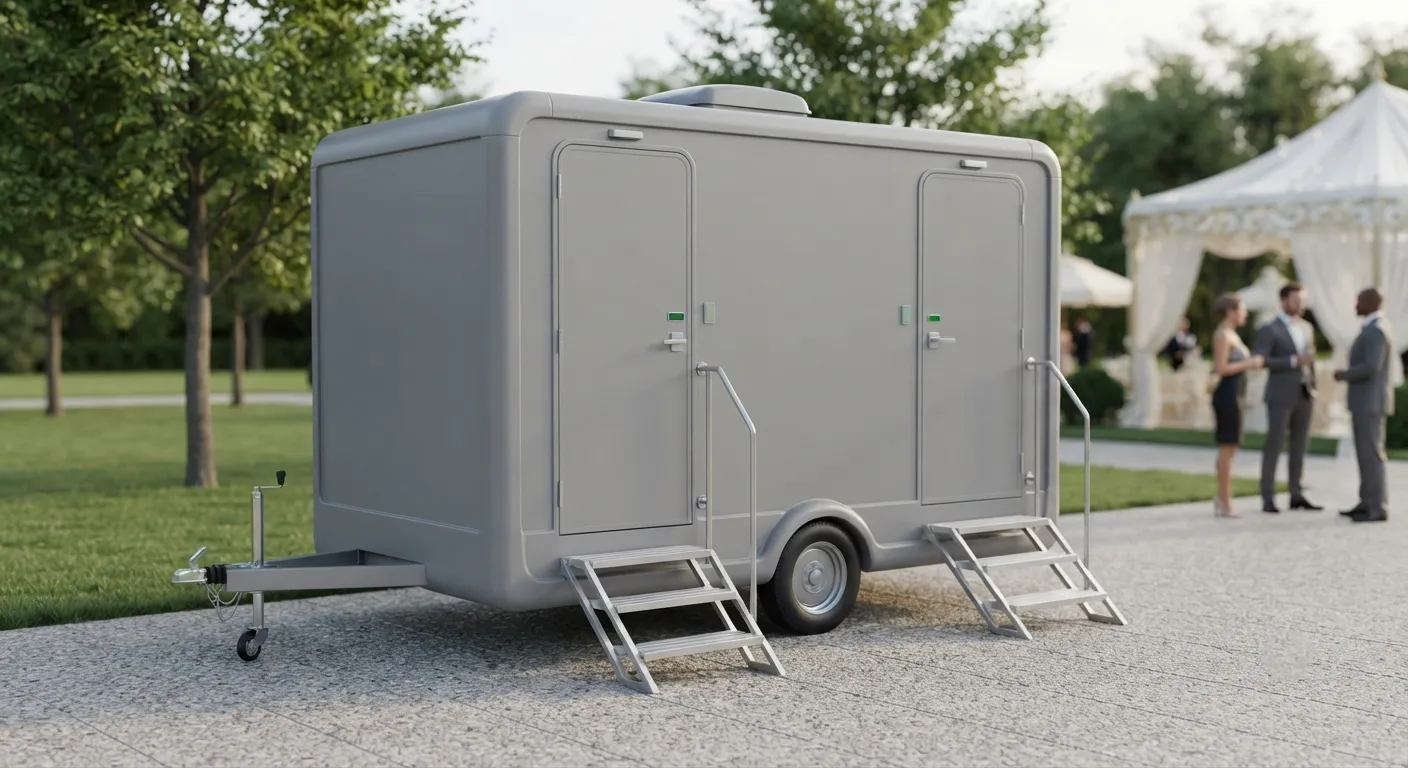
Pick level ground, then check overhead clearance and truck access before you commit to a spot. A standard unit footprint runs about 44 by 48 inches on the ground and stands roughly 92 inches tall, so tuck it somewhere it will not block a doorway or a fire lane. If you are adding an ADA-accessible unit, ADA Standards 213.2 requires at least 5 percent of clustered single-user units to be accessible, and never fewer than one. That accessible unit needs a 60-inch turning circle per ADA Standards 304.3.1, a 32-inch clear door opening under ADA Standards 404.2.3, and a stable, slip-resistant surface under ADA Standards 302.1 to sit on. Our porta potty placement guide walks through slope and setback in more detail. If the closest legal spot sits in the public right of way along a Trenton street, that placement needs confirming with the city before delivery day, since we cannot speak to a local ordinance we have not verified. Renters near Lower Makefield, 6.5 miles west of Trenton, run into the same right-of-way question on tight residential lots.
What comes with delivery and what do I need to arrange myself?
Delivery, setup and one scheduled service visit come standard; everything past that is your call. A standard rental runs $100 to $350 a day depending on duration and add-ons, with weekly rates landing between $130 and $500 and monthly terms between $125 and $325. Roll-off dumpster deliveries need about 60 feet of straight clearance behind the truck, so measure your driveway or lot before delivery morning. If your project needs handwashing alongside toilets, remember that 29 CFR 1910.141(d)(2) requires soap and towels or a hand-drying device at wash stations; hand sanitizer alone does not satisfy that rule. Crews applying paint, coatings, herbicides or insecticides trigger a separate washing requirement under OSHA 1926.51(f)(1), so budget for a handwashing station or portable sink on those jobs specifically. Every worksite under 1926.51(a)(1) also needs an adequate supply of potable water, which most renters cover with a tank refill built into their service schedule. If you are staging a construction dumpster next to your toilets, check dumpster weight limits and what cannot go in a dumpster before the first load goes in.
When should I schedule service and pickup?
Book service around your busiest day, not your delivery date. A single-day event in Trenton typically books a standard unit at the day rate, while multi-week construction jobs do better on the weekly or monthly tier since a longer rental never costs more per day than a short one. Here is how the standard unit pricing breaks down:
| Duration | Low | Typical | High |
|---|---|---|---|
| Day | $100 | $150 | $350 |
| Week | $130 | $200 | $500 |
| Month | $125 | $200 | $325 |
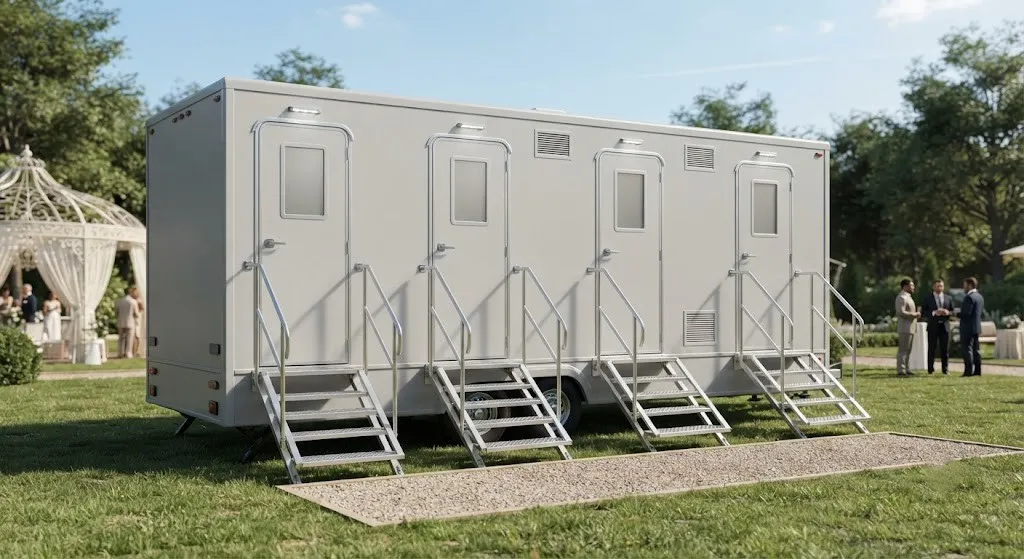
Weekend rentals for a Saturday event run higher than a weekday rate because of the compressed turnaround, so ask about that specifically when you request a quote. Pickup day matters as much as delivery day: schedule it for the morning after your event ends, not the same night, so cleanup crews and guests are not competing for the same unit. For multi-day festivals or fairs, check our festival restroom and county fair restroom pages for stall-count guidance before you lock in a pickup window.
Frequently asked questions
How far ahead should I book a porta potty in Trenton?
Two to three weeks covers most standard rentals; peak wedding and festival season fills faster. If your date lands on a major event weekend, call sooner. Emergency same-day delivery is sometimes possible, but availability depends on truck routing that day, not guaranteed slots.
Do I need a permit to place a porta potty in Trenton?
Placement on private property usually does not need one; placement in the public right of way does need confirming with the city, since permit rules vary by block and were not verified for this page. Ask your Trenton Porta Pros rep to check before delivery.
Can I add a handwashing station to my order?
Yes. Most renters pair a handwashing station or portable sink with their toilet order, especially on food-service or paint and coating jobs where OSHA 1926.51(f)(1) applies directly to the work being done.
What size unit fits a small backyard party?
A standard unit fits most yards at 44 by 48 inches footprint. For upgraded events, a deluxe flushable unit or small restroom trailer adds comfort without needing much more space.
How often does the unit get serviced during a long rental?
Baseline service under ANSI/PSAI Z4.3 is once weekly for up to 10 users over a 40-hour week. High-traffic events or larger crews need more frequent visits, which Trenton Porta Pros schedules against your actual headcount.
Next step
Get a delivery date
Tell us the address, the dates and the headcount. We size the order and confirm the route.